Introduction
Advanced Predictive Business Analysis is transforming how organizations plan for the future. Companies no longer rely only on past performance. Instead, they use data to anticipate trends, risks, and opportunities before they happen.
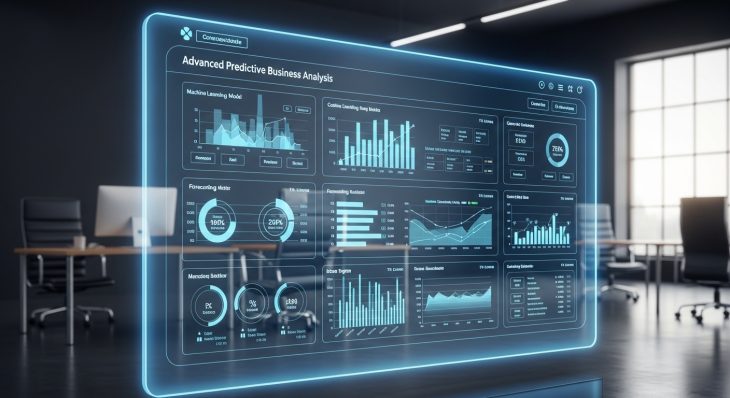
Advanced Predictive Business Analysis combines historical data with machine learning models to generate accurate forecasts. As a result, organizations make proactive decisions and improve strategic planning.
Moreover, businesses that adopt predictive analytics gain a significant competitive advantage. They respond faster and operate with greater confidence.
Why Advanced Predictive Business Analysis Matters
Advanced Predictive Business Analysis shifts organizations from reactive to proactive strategies. Traditional analytics explains past results. However, predictive analytics reveals future possibilities.
For example, companies can forecast customer demand and adjust inventory levels accordingly. As a result, they reduce waste and improve efficiency. In addition, predictive insights help optimize marketing campaigns and financial planning.
However, accurate predictions require high-quality data and proper implementation. Therefore, organizations must align analytics initiatives with business objectives.
Companies that embed predictive analysis into decision-making improve agility, accuracy, and long-term performance.
Core Components of Advanced Predictive Business Analysis
A strong Advanced Predictive Business Analysis framework includes several essential components.
Data Modeling and Machine Learning
Predictive analysis relies on advanced algorithms that process large datasets. These models identify hidden patterns and correlations.
For example, machine learning systems continuously improve accuracy as new data is introduced. Therefore, forecasting becomes more reliable over time.
Forecasting and Scenario Planning
Forecasting tools estimate future trends based on historical data. Organizations can simulate different scenarios and evaluate potential outcomes.
As a result, executives can prepare strategies before challenges arise. In addition, scenario planning reduces uncertainty and supports better decision-making.
Real-Time Data Integration
Real-time data enhances predictive accuracy. Systems that update continuously provide more relevant and timely insights.
Therefore, businesses can react immediately to market changes. However, proper integration is necessary to ensure consistency and reliability.
Strategic Benefits of Advanced Predictive Business Analysis
Advanced Predictive Business Analysis delivers strong business value.
First, it improves planning accuracy. Organizations allocate resources more efficiently.
Second, it strengthens risk management. Potential disruptions are identified early.
Third, it enhances customer experience. Personalized strategies increase engagement and loyalty.
In addition, predictive insights support faster and smarter decision-making. Therefore, overall performance improves significantly.
Conclusion
Advanced Predictive Business Analysis is a powerful tool for modern enterprises. It transforms data into forward-looking insights that drive strategic success.
Moreover, organizations that implement Advanced Predictive Business Analysis gain agility, reduce risk, and achieve sustainable growth.