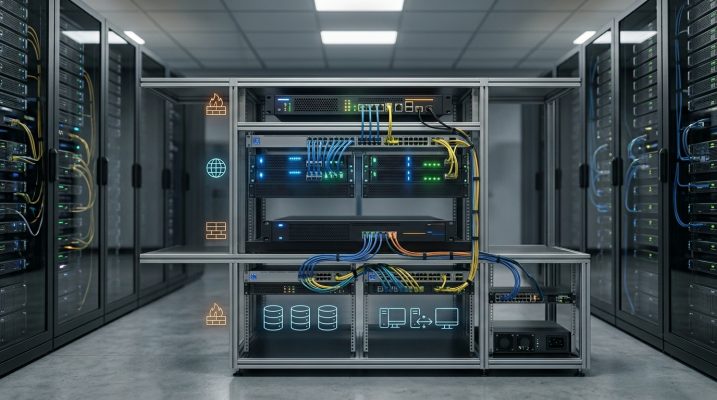
A strong firewall security architecture is essential for protecting organizational networks from unauthorized access, malware, and targeted cyberattacks. As digital infrastructures grow more interconnected, businesses must design firewall systems that provide layered protection, seamless traffic control, and continuous threat monitoring. A well structured architecture ensures that every entry point is secured, reducing the risk of breaches and enhancing overall network resilience. The foundation of firewall architecture begins with segmentation. By dividing the network into zones based on sensitivity and function, organizations can control traffic flow and limit the spread of potential threats. Critical systems are placed in highly restricted zones, while public facing services are isolated in demilitarized zones (DMZs). This structure ensures that even if one area is compromised, the rest of the network remains protected. Another essential component is policy enforcement. Firewalls operate based on predefined rules that determine which traffic is allowed or blocked. Effective policies are built on the principle of least privilege, ensuring that users and applications only access what they truly need. Regular policy reviews help maintain security as business requirements evolve. Modern firewall architectures also incorporate advanced technologies such as intrusion prevention systems, sandboxing, and encrypted traffic inspection. These tools enhance detection accuracy and provide deeper visibility into potential threats. Cloud based firewalls further strengthen protection by securing distributed environments and remote users. Centralized management is crucial for maintaining consistency across multiple firewall deployments. Security teams use unified dashboards to monitor traffic, analyze logs, and respond to incidents in real time. This centralized approach improves efficiency and reduces the likelihood of configuration errors. As cyber threats become more sophisticated, firewall security architecture must evolve accordingly. Organizations that invest in scalable, intelligent, and well structured firewall systems gain a significant advantage in protecting their digital assets and ensuring operational continuity.