Introduction
Advanced Integrated IT Solutions are transforming how organizations manage operations and data. In today’s fast-paced digital environment, disconnected systems create inefficiencies and limit growth.
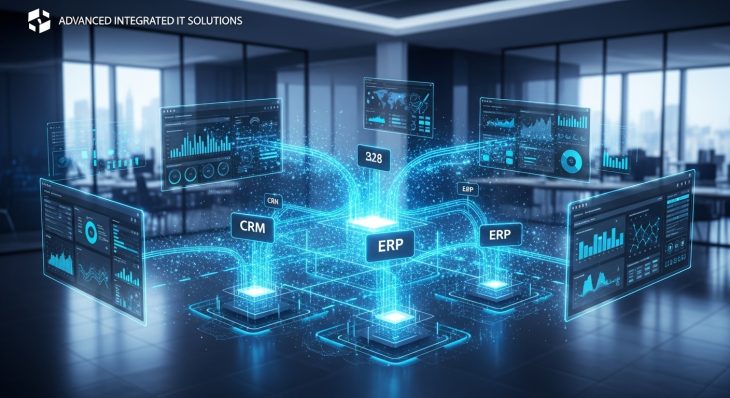
Advanced Integrated IT Solutions connect all technological components into a unified ecosystem. As a result, businesses achieve seamless data flow, improved accuracy, and stronger operational control.
Moreover, organizations that adopt integration strategies enhance collaboration and gain a competitive advantage.
Why Advanced Integrated IT Solutions Matter
Advanced Integrated IT Solutions eliminate system fragmentation. Traditional infrastructures often operate in silos. However, integration ensures that all platforms communicate effectively.
For example, CRM, ERP, and communication systems can share real-time data. As a result, duplication is reduced and accuracy improves. In addition, integrated analytics provide a complete operational overview.
However, successful integration requires strategic planning. Therefore, organizations must align systems with business objectives.
Companies that implement integrated solutions improve efficiency, transparency, and decision-making.
Core Components of Advanced Integrated IT Solutions
A strong Advanced Integrated IT Solutions framework includes several key components.
System Connectivity and Data Flow
Integration connects multiple platforms into a unified system. Data flows seamlessly across departments and applications.
As a result, organizations eliminate data silos and improve accuracy. Moreover, real-time access enhances operational visibility.
Analytics and Decision Support
Integrated systems provide comprehensive data for analysis. Advanced analytics tools process information to generate actionable insights.
For example, leadership teams can monitor performance and identify trends instantly. Therefore, decision-making becomes proactive rather than reactive.
Automation and Workflow Synchronization
Automation enhances integration by synchronizing workflows across systems. Repetitive tasks are handled automatically, improving efficiency.
As a result, organizations reduce manual workload and minimize errors. In addition, operations become faster and more consistent.
Strategic Benefits of Advanced Integrated IT Solutions
Advanced Integrated IT Solutions deliver significant business value.
First, they improve operational efficiency. Systems work together seamlessly.
Second, they enhance collaboration. Teams access shared data and align their efforts.
Third, they support better decision-making. Real-time insights improve strategic planning.
In addition, integration strengthens performance and scalability. Therefore, businesses achieve long-term growth.
Conclusion
Advanced Integrated IT Solutions are essential for modern enterprises. They transform disconnected systems into a unified and efficient ecosystem.
Moreover, organizations that implement Advanced Integrated IT Solutions achieve improved performance, stronger collaboration, and sustainable success.