Introduction
Technology transformation is no longer optional for modern enterprises. Rapid market shifts, evolving customer expectations, and global competition require organizations to modernize their Technology ecosystems. Without a clear digital transformation strategy, businesses risk inefficiency, stagnation, and competitive decline.
A future-ready Technology environment integrates digital platforms, intelligent automation, scalable infrastructure, and secure data management. As a result, enterprises achieve agility, innovation, and sustainable operational growth.
Moreover, organizations that proactively modernize their Technology architecture position themselves as industry leaders. Therefore, Technology transformation must be treated as a strategic business priority rather than a simple IT upgrade.
The Importance of Enterprise Technology Modernization
Modern Technology enables businesses to adapt quickly to changing environments.
For example, legacy systems often limit scalability and integration capabilities. By upgrading to modern digital platforms, companies enhance flexibility and improve cross-department collaboration. As a result, productivity and operational transparency increase significantly.
In addition, customer-facing Technology such as digital portals and intelligent CRM systems improves engagement and personalization. However, modernization requires structured governance and executive sponsorship. Therefore, aligning Technology initiatives with long-term corporate objectives is essential.
Enterprises that prioritize modernization strengthen resilience, innovation capacity, and long-term competitiveness.
Key Pillars of a Future-Ready Technology Ecosystem
Smart Infrastructure and Edge Computing
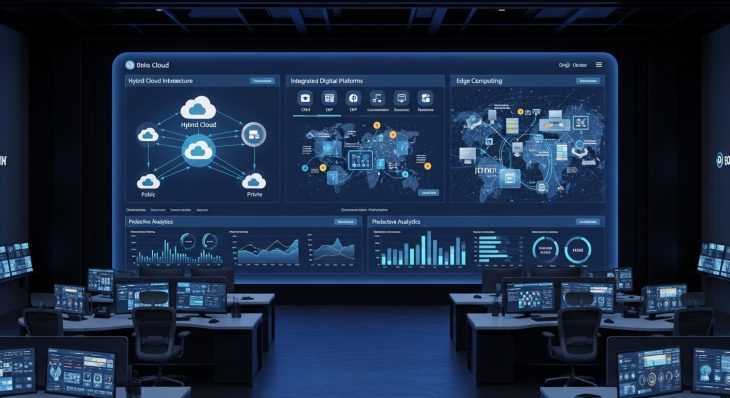
Modern enterprises are moving beyond traditional centralized systems. Smart infrastructure and edge computing reduce latency, enhance performance, and enable real-time processing. As a result, businesses improve operational speed and data responsiveness.
Hybrid and multi-cloud environments further enhance scalability and reliability. Therefore, organizations can maintain service continuity while optimizing costs.
Digital Platforms and System Integration
Disconnected systems create inefficiencies and data silos. Integrated Technology platforms unify workflows, communication, and analytics into a single ecosystem. As a result, decision-makers gain comprehensive visibility across operations.
API-driven architectures enable seamless integration between applications. Moreover, scalable platforms support rapid feature deployment and innovation. Therefore, integration is a core component of successful Technology transformation.
Advanced Analytics and Intelligent Insights
Data-driven enterprises outperform competitors. Advanced analytics tools convert raw data into actionable insights. Predictive modeling identifies trends, while real-time dashboards monitor performance indicators.
However, analytics require strong data governance policies to ensure accuracy and compliance. Therefore, organizations must implement standardized data frameworks and continuous monitoring processes.
Strategic Advantages of Technology Transformation
Technology transformation delivers measurable business value across multiple dimensions.
First, operational agility increases. Organizations can respond rapidly to market shifts and emerging opportunities. As a result, decision cycles become shorter and more precise.
Second, cost optimization improves. Modern cloud-based solutions reduce infrastructure overhead and maintenance expenses. Moreover, automation reduces repetitive tasks and resource waste.
Third, innovation accelerates. Enterprises can experiment with new digital services, enhance customer experiences, and expand globally. Therefore, Technology transformation becomes a growth engine rather than a cost center.
Best Practices for Driving Technology Success
A structured roadmap is essential for successful Technology transformation.
Organizations should begin with a comprehensive digital maturity assessment. Therefore, identifying strengths and gaps ensures targeted improvements.
Executive leadership must actively support transformation initiatives to ensure cultural alignment. In addition, employee training programs encourage adoption and minimize resistance to change.
Partnering with reputable Technology vendors and leveraging insights from global research firms such as Gartner can guide implementation strategies. Moreover, continuous evaluation and system optimization ensure long-term sustainability.
Regular performance monitoring, security audits, and innovation reviews keep the Technology ecosystem adaptive and resilient. As a result, enterprises remain future-ready in an evolving digital landscape.
Conclusion
Technology transformation defines the future of enterprise success. By modernizing infrastructure, integrating platforms, and leveraging intelligent analytics, organizations achieve agility, efficiency, and innovation. Moreover, companies that embrace advanced Technology ecosystems enhance competitiveness, strengthen resilience, and unlock sustainable growth opportunities. Therefore, investing in a structured Technology transformation strategy is essential for long-term enterprise leadership.