Introduction
Security Solutions have become a strategic necessity for modern enterprises facing cyber threats, regulatory requirements, and operational vulnerabilities. Organizations handle massive amounts of sensitive data daily, making robust Security measures critical. However, without a structured Security framework, businesses remain exposed to risks and potential losses.
A complete Security Solutions framework integrates network protection, endpoint security, cloud safeguards, and employee awareness into a unified strategy. As a result, companies reduce vulnerabilities, maintain compliance, and safeguard critical business assets.
Moreover, enterprises that adopt advanced Security Solutions strengthen resilience, improve operational efficiency, and build trust with stakeholders. Therefore, a proactive Security approach is essential for long-term success.
Why Security Solutions Are Essential
Security Solutions help businesses defend against cyberattacks, insider threats, and operational risks.
For example, intrusion detection systems and firewalls prevent unauthorized access to critical data. As a result, organizations maintain confidentiality, integrity, and availability of systems. In addition, endpoint security protects devices from malware, ransomware, and phishing attacks.
However, technology alone is not enough. Security initiatives must align with organizational policies, regulatory compliance, and business objectives. Therefore, executive sponsorship and clear implementation plans are critical for effective deployment.
Companies prioritizing Security Solutions enhance risk management, operational continuity, and corporate credibility.
Core Components of Security Solutions
A robust Security framework relies on three primary pillars.
Network and Infrastructure Security
Firewalls, VPNs, and intrusion detection systems form the backbone of enterprise Security. Properly configured networks prevent unauthorized access and detect anomalies in real-time. As a result, organizations reduce the risk of breaches and operational disruptions.
Moreover, continuous monitoring allows IT teams to respond proactively to emerging threats. Therefore, preventive measures reduce downtime and enhance business continuity.
Endpoint and Application Security
Protecting endpoints—including laptops, mobile devices, and IoT systems—is essential. Antivirus software, encryption, and multi-factor authentication shield devices from cyber threats. In addition, secure application development and timely patching reduce vulnerabilities.
However, evaluating software compatibility and monitoring updates are critical. Therefore, ongoing maintenance and testing strengthen overall Security posture.
Cloud and Data Security
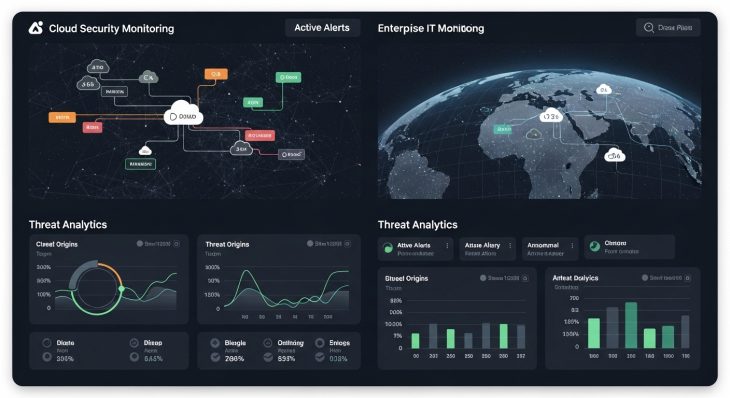
As enterprises adopt cloud platforms, securing stored data is crucial. Cloud Security Solutions include access controls, encryption, and real-time threat monitoring. As a result, organizations safeguard sensitive information while maintaining operational flexibility.
In addition, compliance with standards such as GDPR and HIPAA ensures legal and ethical data handling. Moreover, employee awareness programs reduce human error and reinforce Security policies. Therefore, data protection must be embedded into all IT initiatives.
Strategic Benefits of Security Solutions
Implementing Security Solutions delivers measurable advantages for enterprises.
First, operational resilience improves. Systems are safeguarded, and disaster recovery plans ensure continuity during incidents. As a result, downtime and losses are minimized.
Second, risk management and compliance are strengthened. Organizations meet regulatory requirements while proactively mitigating financial and reputational risks. Moreover, predictive analytics help anticipate threats before they escalate.
Third, customer trust and organizational credibility increase. Secure operations demonstrate a commitment to protecting sensitive data, enhancing the company’s reputation. Therefore, investing in Security Solutions is both strategic and essential.
Best Practices for Deploying Security Solutions
Successful deployment requires strategic alignment and careful planning.
Centralizing data and implementing access controls improves efficiency and oversight. Therefore, enterprises should adopt integrated Security platforms for monitoring and response.
Employee training and awareness programs are essential to minimize human error. Moreover, partnering with reputable vendors provides advanced tools, expertise, and ongoing support. External references, such as Gartner, can guide the selection of best-in-class Security technologies.
Regular audits, penetration testing, and system updates maintain protection against evolving threats. As a result, Security Solutions become a sustainable enabler of growth, resilience, and operational excellence.
Conclusion
Security Solutions define how modern enterprises protect assets, maintain compliance, and operate safely. By integrating network, endpoint, and cloud Security, organizations achieve resilience, operational efficiency, and strategic foresight.
Moreover, companies embedding Security Solutions into their core operations reduce risk, enhance customer confidence, and maintain a competitive advantage. Therefore, a comprehensive Security framework is essential for sustainable enterprise success.