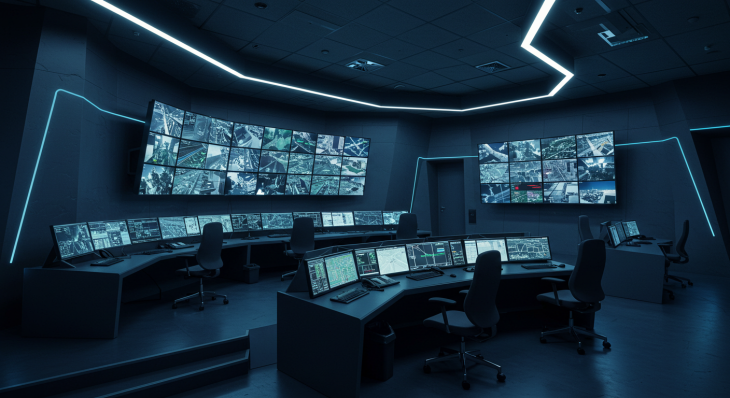
A control room is more than a collection of screens and servers. It is an architecture of attention — carefully engineered to sustain human focus over long, unbroken stretches. In Dubai, where operations run 24/7, this architecture must support not just technology, but biology. Lighting is tuned to minimize eye strain while maintaining alertness. Airflow is calibrated to prevent drowsiness without causing discomfort. Furniture is shaped to support posture during hours of stillness. Even the acoustics are designed to absorb ambient noise while allowing critical alerts to cut through. This human-centered approach recognizes a fundamental truth: the most advanced system is only as effective as the person interpreting it. Fatigue, distraction, or discomfort can erode performance faster than any technical failure. Thus, the room itself becomes a tool — one that extends the operator’s cognitive capacity. Desks curve to match natural sightlines. Monitor arms adjust with a touch. Cables vanish into hidden channels, reducing visual clutter. The goal is seamlessness: the operator should never think about the interface, only the information. This philosophy extends to workflow. Shift changes are choreographed to preserve situational awareness. Handover protocols ensure continuity of context, not just tasks. Rest areas are placed just far enough to offer mental reset, but close enough for rapid recall. In this environment, every detail serves a purpose. The color of a status light, the placement of a button, the rhythm of system updates — all are optimized for clarity and speed. The result is a space where humans and machines coexist in productive harmony, each amplifying the other’s strengths. It is not a fortress of technology, but a habitat for sustained vigilance — where awareness is not a momentary state, but a continuous condition.